
A close look at the Jackery HomePower 3600 Plus portable power station and whether its size and expandability make sense as home backup.
The Backup Unit That Wants to Be a Whole-Home System
Most portable power stations will carry a fridge through a bad night. The Jackery HomePower 3600 Plus is after something bigger: keeping your house comfortable when the outage runs for days, and doing it without a fuel tank or a generator’s roar. It starts as a big 3,584Wh box with real grunt, and with add-on battery packs it scales to what starts to look like actual whole-home backup.
That puts it in a different conversation than your usual camp-ready station. Before you write a check this size, it’s worth understanding exactly what you’re buying and where it does and doesn’t fit.
What It’s Built For
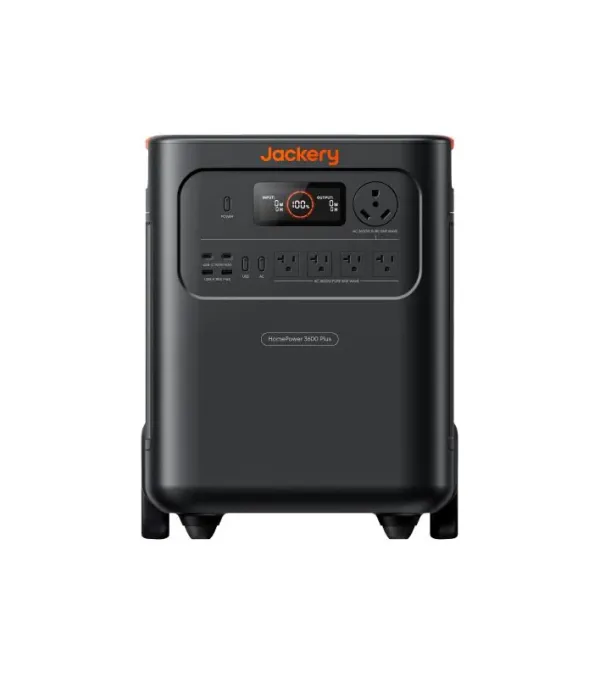
The HomePower 3600 Plus is built around home backup first, portability second. At its core it’s a lithium iron phosphate battery holding 3,584 watt-hours, feeding 3,600W of continuous AC output with a 7,200W surge. That surge headroom is the part that matters in practice. Motors draw a big spike on startup, so a furnace or a well pump that sips 1,200W can demand three times that for a moment. The 3600 handles that comfortably, and independent reviews from PCMag, TheSolarLab, and others have confirmed it running refrigerators, furnaces, and pumps through real outages without complaint.
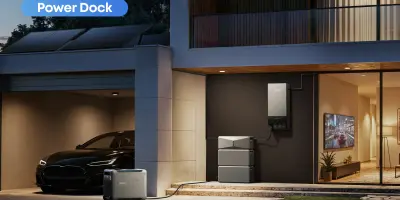
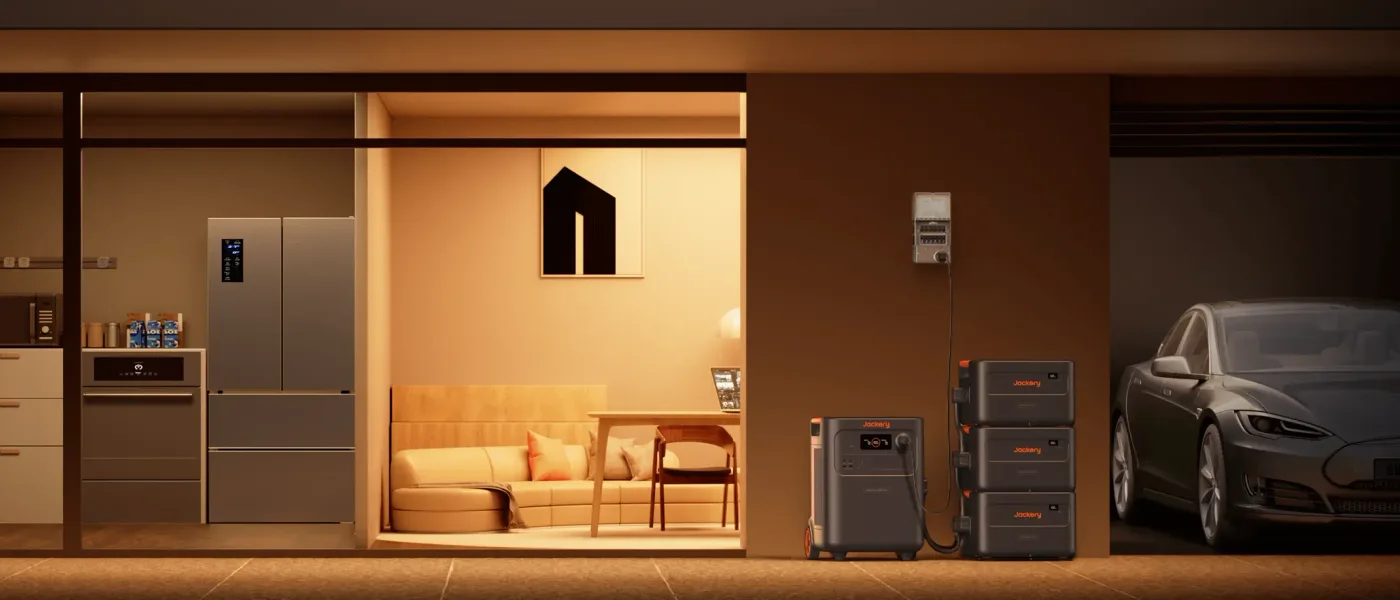
Then there’s the expansion story, and it’s genuinely the headline. You can add up to five matching battery packs and take a single unit past 21.5kWh. That’s not “a few extra hours.” That’s days of power for essential appliances, or a serious solar battery if you’ve got panels on the roof. Jackery’s own figures put the range at 15 hours to 9 days of backup depending on the load, which lines up with what reviewers have seen in extended winter tests.
Design and Build
Let’s be straight about the weight. At roughly 77 pounds, this is a cabinet you roll into place, not something you toss in the truck for a weekend. It has wheels and a handle for the moving, and it’s happiest parked in a garage or next to the breaker panel. If you wanted a station you’d carry around, this isn’t it, and there’s no point pretending otherwise.
The build itself is what you’d want at this level. LiFePO4 chemistry gives it better thermal stability and a far longer rated life than older lithium cells, with Jackery claiming 6,000 cycles before dropping to 70% capacity. It’s rated to keep working down to -4°F, which is a meaningful detail for anyone in a cold-weather outage. The unit is designed for indoor or sheltered use, not open rain, and it runs essentially silent next to a gas generator. It’s not a small piece of gear, but for a machine this powerful the footprint is actually reasonable.
Performance in the Field
The output story is where this unit earns its keep. Independent testers have run it through extended outages and cold-weather conditions and consistently found it delivers on its rated power. The pure sine wave output means sensitive electronics and appliances run clean, and the 30A RV outlet gives you a proper connection for campers or heavier setups. Multiple sources report solid efficiency, around 89% on the inverter, which is respectable for a unit this size.
Recharging is fast for the capacity. Plug it into the wall and you can take it from empty to full in about 2.5 hours at up to 1,800W, which is the kind of speed that matters when you’re racing an incoming storm. The app lets you track charge level, watch loads, and check things remotely over Wi-Fi or Bluetooth, and reviewers generally describe setup as plug-and-play. There’s no electrician involved and no wiring, which is the whole appeal versus a hardwired generator.
Where It Falls Short
The weight is the most obvious trade, and it’s worth saying plainly. If your plan involves moving this station, you’ll be planning around 77 pounds instead of ignoring it. There are lighter fixed-capacity options if portability is your priority, and this one is happiest where it lands.
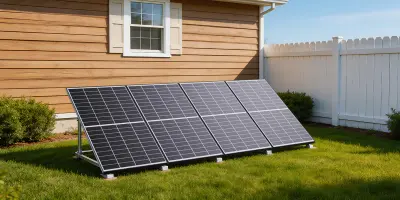
Solar input is the quieter disappointment. It’s capped at 1,000W through the dual ports, which is on the low side for a station this large. That means a full recharge from panels needs a long stretch of strong sun, not a lazy afternoon. If your whole plan is off-grid solar, you’ll spend a lot of your sunny hours waiting. The AC charging is fast enough that it’s easy to rely on the wall instead, which undercuts the point of a solar-first setup.
Price is the third thing. The HomePower 3600 Plus carries a premium sticker relative to fixed-capacity rivals, and serious backup means buying expansion packs on top of the base unit. It frequently sells well below its full price, and at that discounted level the value picture turns genuinely strong. Paying full freight is a harder conversation. A few owners on Reddit also mention slow or inconsistent customer service, which is worth knowing before you commit to a big purchase.
Who Should Buy This
This is for someone who wants generator-grade backup without the fuel, the noise, or the maintenance. If your outages run long, or you’re on solar and want a serious battery to hang off it, the HomePower 3600 Plus is a genuinely smart buy. The expansion path means you can start with the base unit and grow into capacity over time instead of buying a whole new system later. It’s also a natural fit for RVs and tiny homes where the 30A outlet and high continuous output matter.
If you just need a few hours of lights and phone charging, or you want something you can actually carry, you’ll spend less and be happier with a smaller fixed-capacity unit. Same goes for anyone who’ll never add an expansion pack, since that growth path is a big part of what you’re paying for.
Bottom Line
The Jackery HomePower 3600 Plus does what it sets out to do: deliver reliable, quiet, whole-home backup that can grow with you. It’s heavy and it’s a meaningful investment, especially once you scale it, and the solar input leaves you leaning on the wall for fast refills. But the combination of real output, serious expandability, and clean operation makes it one of the strongest options in its class. If you’re building backup for the long haul and don’t mind the size, this is a smart place to start.