
The BLUETTI FridgePower is a purpose-built slim UPS battery backup for fridges and essential home loads. We examine the design, UPS performance, smart features, and whether the single-use approach is worth the premium.
If you’ve ever stood in front of an open fridge watching your dinner slowly warm up during a power outage, you know the feeling. The BLUETTI FridgePower is built specifically for that moment. An ultra-slim 2kWh LiFePO4 UPS designed to keep your fridge running when the grid goes dark, without taking up half your kitchen floor or requiring an electrician to install it.
What the FridgePower Actually Does
Here’s the thing about most portable power stations. They’re generalists. They try to be big enough for a weekend camping trip, powerful enough to run a CPAP machine, and portable enough to carry to the tailgate. The BLUETTI FridgePower takes the opposite approach. It’s a specialist, built for one job: keeping essential home loads running during an outage, with a fridge as the primary target.
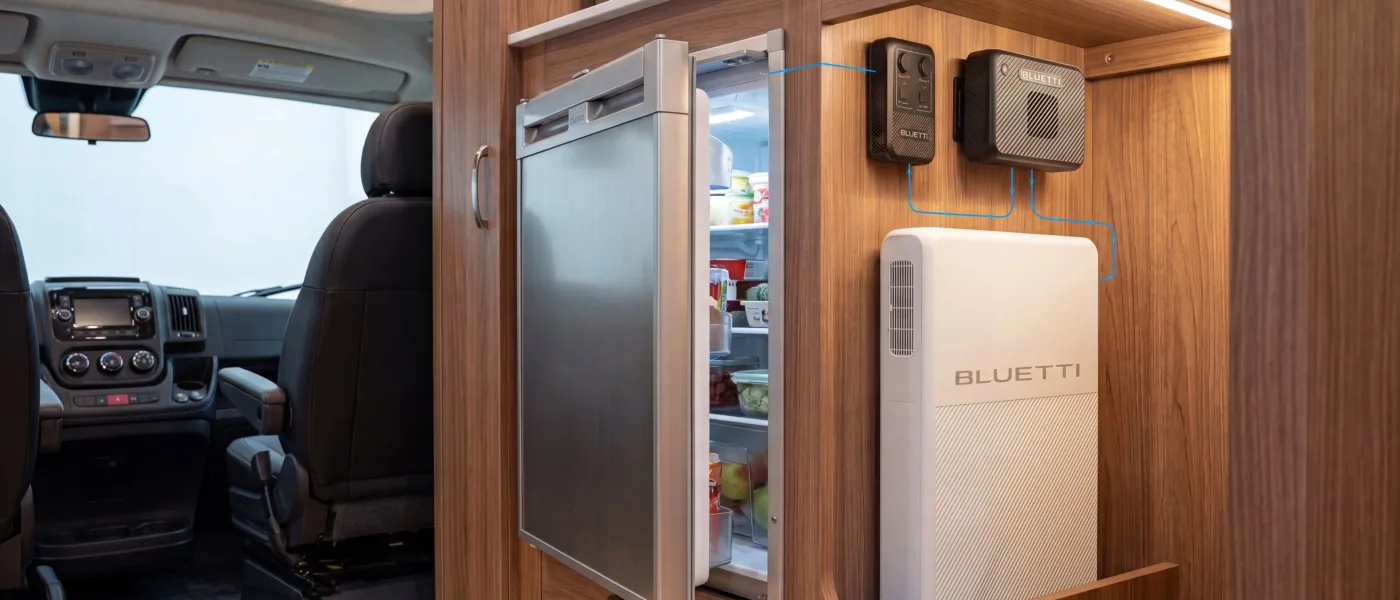
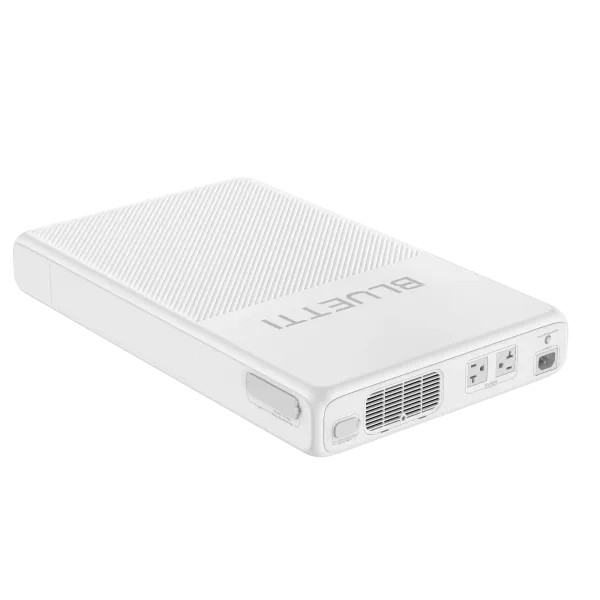
The core unit packs a 2,016Wh LiFePO4 battery and an 1,800W continuous inverter inside a housing that’s only 75mm thick, about three inches. That’s the headline feature. It’s slim enough to sit on top of a refrigerator, mount flat on a wall in a utility closet, or slide into the gap between your counter and the back wall. In plain English, it fits where every other power station you’ve looked at won’t.
The UPS switchover happens in under 10 milliseconds, which is fast enough that electronics and compressors don’t notice the transition. Most of the time, it’s in bypass mode, with grid power passing straight through to whatever’s plugged in without cycling the battery. The battery only kicks in when it detects an outage. That bypass-first design is important because it means the system isn’t burning through charge cycles every time you open the fridge and the compressor kicks on.
Design That Finds Its Own Spot
The size is the first thing that stands out. At 350mm by 580mm by 75mm, it’s roughly the footprint of a large laptop laid flat but thicker. It weighs about 42 pounds, so you’re not carrying it around the campsite, but you don’t need to be. This is a set-it-and-forget-it device that lives where you put it.
The slim profile opens up placement options that don’t exist with box-style power stations. Wall-mount brackets are available if you want it off the floor entirely. It can sit on a shelf in the garage, mount in a utility room, or go directly on top of the fridge. That’s both convenient and keeps the AC outlets and controls at eye level.
Two 120V AC outlets handle the main loads. That’s not a lot of ports, and it’s worth noting up front. For a dedicated fridge setup, one outlet takes the refrigerator and the other can handle a secondary essential like a modem-router, a small sump pump, a fish tank filter, or a portable medical device. If you need more than that, you’re looking at the expansion battery route or a different class of product entirely.
UPS Performance and Real-World Runtime
The 10ms switchover is the technical spec that matters most for a fridge backup. Refrigerator compressors don’t like being power-cycled hard, and a standard UPS in the 10-to-20ms transition range handles that gracefully. The FridgePower’s bypass architecture means the inverter is always ready but not constantly cycling, which keeps the standby power draw low.
On the standby question: BLUETTI advertises 3-4W idle draw, and other testers online have measured around 4.88W in typical conditions. Some setups draw more depending on configuration, so the exact figure depends on your own gear. Either way, it’s low enough that the unit isn’t eating noticeable power while it waits for an outage.
Real-world fridge runtime on the core 2,016Wh unit falls in the 18-to-24-hour range depending on your fridge’s efficiency, ambient temperature, and how often the door opens. A newer Energy Star fridge on the efficient end pushes closer to 24 hours. An older model or one that gets opened frequently will see less. The expansion batteries (BlueCell 200, up to three of them) bring total capacity to 8,064Wh, which pushes runtime into multi-day territory for most single-fridge setups.
AC charging refills the unit from empty in about 1.8 hours at 1,400-1,440W input. Solar input supports up to 1,000W, which means you can recharge from panels during an extended outage. That’s more of a secondary benefit for this product’s intended use case.
Smart Features That Earn Their Keep
The BLUETTI app connects over Wi-Fi or Bluetooth and does more than just show a battery percentage. The Extreme Weather Alert feature is the standout. When severe weather is in the forecast, it automatically triggers the unit to charge or top up so you’re at full capacity before the storm hits. If you live in an area where power goes out with every thunderstorm or fire-season shutoff, that’s genuinely useful. It removes the “did I remember to charge the backup” worry.
The app also shows estimated runtime, lets you switch between operating modes (Standard, PV Priority, Time Control, Custom), and tracks power usage over time. Voice control works through Alexa, Google Home, and Home Assistant if you want to check status hands-free.
Heads up, though: the runtime estimates in the app can jump around because fridge compressors cycle on and off. It’s estimating based on current load, so when the compressor kicks on, the remaining time estimate drops noticeably, then recovers when the compressor cycles off. That’s not a flaw in the product, but it’s worth knowing if you’re the type who’ll check the app every hour during an outage and wonder why the number keeps changing.
Where It Falls Short
The FridgePower isn’t the cheapest way to buy a watt-hour, and that’s by design. You’re paying extra for the slim profile, mostly, plus the fanless cooling that keeps it quiet enough to live in a kitchen and the app features like weather alerts. If you don’t actually need something that tucks behind the fridge or pings you before a storm, a plain box-style station will give you more capacity for the same money.
The two AC outlets on the main unit are limiting. For the primary use case, a single fridge, it’s fine. But if you were hoping to plug in your fridge, a router, a small freezer, and a lamp all at once, you’ll run into a wall fast. The expansion batteries don’t add extra outlets either, so that limitation stays.
The idle draw variance is worth keeping an eye on. Most users will see numbers close to the advertised range, but there are reports of higher draw depending on configuration. It’s not a dealbreaker at these levels, but it’s the kind of detail that matters if you’re comparing standby efficiency between competing products.
Who Should Buy This
If you’ve got a fridge full of food and a history of power outages that last long enough to matter, whether from storms, fire-season shutoffs, or an unreliable grid, the BLUETTI FridgePower is designed for exactly that problem. The slim profile means it goes where other backup systems won’t, the UPS switching is fast enough to keep compressors happy, and the smart features add a layer of proactive protection that most UPS units don’t offer.
It makes less sense if you need general-purpose portable power for camping, tailgating, or running a whole home office. And if cost-per-watt-hour is your primary filter, there are more budget-friendly options that don’t offer the same form factor or feature set.
For the specific job it’s built for, keeping your food cold when the grid goes down, the FridgePower earns its place. It’s not trying to be everything, and that’s exactly why it works.