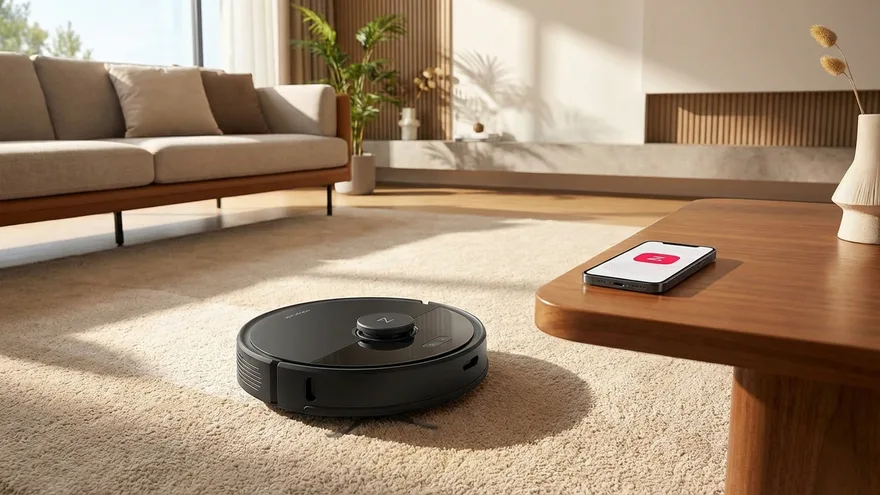

Our Roborock Q7 L5 review comes from a month of daily use in a house with two dogs and a cat. We cover hard-floor performance, LiDAR navigation, pet hair management, and the self-emptying upgrade worth paying extra for.
If you’ve ever had a robot vacuum that just bumped around the room more or less at random, you already know how far these things have come. Our last one was about seven years old. No mapping. No app. No mopping. It did an OK job on bare floors, but in a house with two dogs and a cat, the hair never let up. It always wrapped around the brush, and we were emptying that tiny bin every single day. When it finally started losing suction and leaving streaks, we took it as a sign and decided it was time to see what a modern robot vacuum could actually do.
We picked up the Roborock Q7 L5 about a month ago, and honestly, the difference has been noticeable right from the first clean.
What It’s Built For
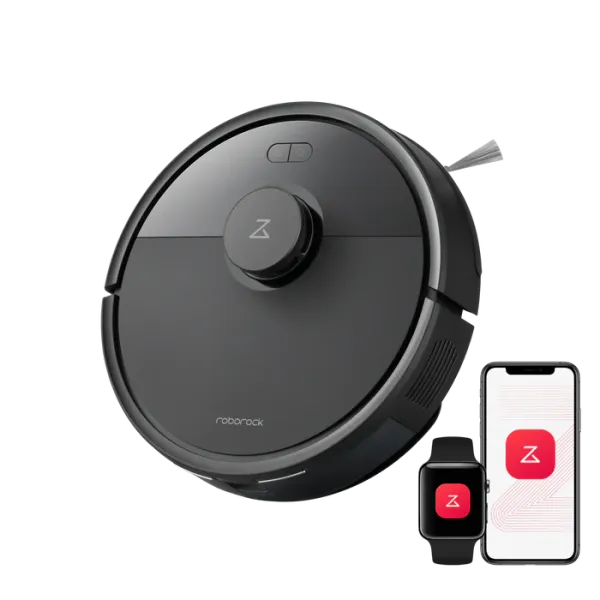
The Q7 L5 sits in Roborock’s current mid-range lineup, but it brings features that used to be reserved for pricier models. It packs 8,000 Pa of HyperForce suction, which Roborock says is among the strongest in this price bracket. We have a mix of hardwood, tile, and medium-pile rugs, and with this many pets the floors always seem to carry some kind of hair on them, so the Q7 L5 transitions between those surfaces smoothly while automatically boosting power when it hits carpet.
The hardware includes a dual anti-tangle system. There’s a floating main brush that uses a comb design to reduce hair wrap, plus an anti-tangle side brush. For anyone with shedding pets, that’s the kind of spec that actually shows up in daily use. It also does vacuuming and mopping in one pass with electronic water control, letting you pick between three levels of water flow for the mop pad.
Navigation comes from PreciSense LiDAR, which scans the room and builds a detailed map fast. It supports up to three floor maps, so it works across multiple levels if you’re willing to move the base between floors.
Mapping, App, and What That Actually Means Day to Day
This is where the Q7 L5 really stands out, especially if you’re coming from something that didn’t have any of it. The LiDAR scan is quick. Within a few minutes the robot had mapped our main floor, and we could label rooms, set no-go zones around the dog bowls, and create invisible walls for the spots we wanted it to skip.
The Roborock app is intuitive. We set up different cleaning schedules for different rooms, told it to vacuum the kitchen every morning and the living room every other day, and adjusted suction levels per room. Being able to start a clean from the phone while we’re out running errands has been surprisingly convenient. You can also send it to a specific spot with tap-to-clean if you spill something.
The app also handles multi-floor mapping. We set up a separate map for the upstairs, and the robot recognizes which floor it’s on when we carry it up. That worked without any fuss.
How It Actually Cleans
On hard floors, the Q7 L5 is genuinely impressive. Crumbs, dust, and the pet hair that’s always underfoot, the usual kitchen debris, it picks up everything in a single pass without leaving streaks. The suction feels strong enough that we’ve stopped sweeping between vacuum runs, which is the whole point of owning a robot vacuum in the first place.
Carpet is a more mixed story. On our medium-pile rugs, it does a decent job with daily scheduled runs. We set it to run the living room every morning, and that keeps the dog hair from building up. If you let it go a few days, though, you’ll notice the difference. The carpet boost helps, but it’s not the kind of deep clean you’d get from a dedicated upright vacuum.
For us, with all the pet hair around, running it frequently is the key. The anti-tangle brushes do help. We’ve only had to clear hair from the brush once in a month, which is a huge improvement over our old robot. But independent lab testing from Vacuum Wars has shown the L5 struggles with flattened pet hair on carpet, removing only about 12 percent in one of their tests. Our own results with regular scheduling have been better than that, but if deep carpet pet hair is your main concern, the Q7 M5 scores noticeably better in those same tests.
One thing we noticed: it can get loud. Not all the time, but when it sucks up something solid, or when hair and debris get into the brush, the noise jumps. On the higher suction settings it’s also noticeably louder. It’s not deal-breaking loud, but the quiet operation claim in the marketing is relative. You’ll hear it working.
The Mopping Setup
The mopping is electronic rather than the vibrating pads you get on Roborock’s higher-end models. That means it’s good for daily maintenance, light spills, and dust, but it’s not scrubbing dried-on stains. On hardwood and tile, with the water flow set to medium, it leaves floors looking clean without puddles.
The catch is that the mop pad doesn’t lift over carpet. So if you want to mop without soaking your rugs, you have to remove the mop pad before the run or set up no-mop zones in the app. The app approach works, but it’s an extra step to remember.
The combined dustbin and water tank is a mixed bag. It’s nice that you empty dust and refill water in one trip, but it also means the bin is smaller than it could be if it were standalone. If you’re mopping regularly, you’ll be checking it more often.
Where It Falls Short
The biggest tradeoff with the base Q7 L5 is the lack of an auto-empty dock. Every few days, you’re pulling out the dustbin and emptying it by hand. For us, that’s been the one thing we wish we didn’t have to do. If you can swing the upgrade to a model with the self-emptying station, we’d highly recommend it. It’s one of those things you don’t realize you want until you’re emptying the bin for the third time in a week.
The mopping is fine for what it is, but it’s not a flagship mop. There’s no vibration, no scrubbing action, just a damp pad dragged across the floor. For daily touch-ups that’s fine. For getting up week-old dried mud from muddy paws or litter a cat tracked across the kitchen, you’ll want to mop by hand.
There’s also no camera-based obstacle avoidance. The LiDAR pathing is excellent for room coverage, but it won’t dodge phone cords, socks, or small toys the way some higher-end models do. You’ll want to do a quick floor scan before you start a run.
The 3,200 mAh battery is smaller than what you’d find on some older Roborock models like the Q7 Max, which had 5,200 mAh. For our single-floor setup, runtime hasn’t been an issue, but if you have a larger home or multiple floors to cover in one charge, it’s worth keeping in mind. The robot does have recharge and resume, so it will go back to the dock, top up, and continue where it left off.
It’s also worth mentioning the Q7 M5, the sibling model. The M5 has 10,000 Pa of suction versus the L5’s 8,000, and in independent lab tests it scores better on pet hair pickup and mopping. It’s often available at a similar price, and it comes in a Plus variant with an auto-empty dock. If you’re comparing the two, the M5 is worth a close look before you decide.
Who Should Buy This
This one makes the most sense if you’re upgrading from an older, non-mapping robot vacuum. The jump in convenience, from the app control to the room-by-room scheduling to the no-go zones, is huge, and you’ll feel it every day. The hard floor cleaning is excellent, and if you have pets and run it on a schedule, it manages pet hair better than any old random-bounce bot ever could.
If you already have a modern robot vacuum and you’re looking for a meaningful upgrade, the L5 probably isn’t that. You’d want to look at models with auto-empty docks, spinning mops, or better obstacle avoidance.
And if pet hair on carpet is your main battle, the Q7 M5 is probably a better fit for similar money.
Bottom Line
The Roborock Q7 L5 is a genuine step up from basic robot vacuums. The LiDAR mapping and app control transform the daily experience, the suction handles hard floors beautifully, and the anti-tangle brushes mean less time picking hair off the roller. But the lack of an auto-empty dock, the light-duty mopping, and the mixed carpet performance mean it’s not the right pick for everyone. If you’ve been running an old random-bump bot and you’re ready for something smarter, this is a solid place to start. Just budget for the self-emptying station if you can swing it.