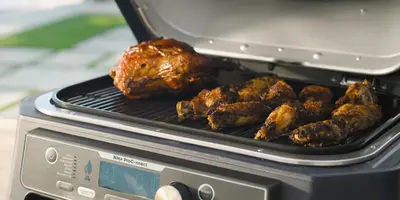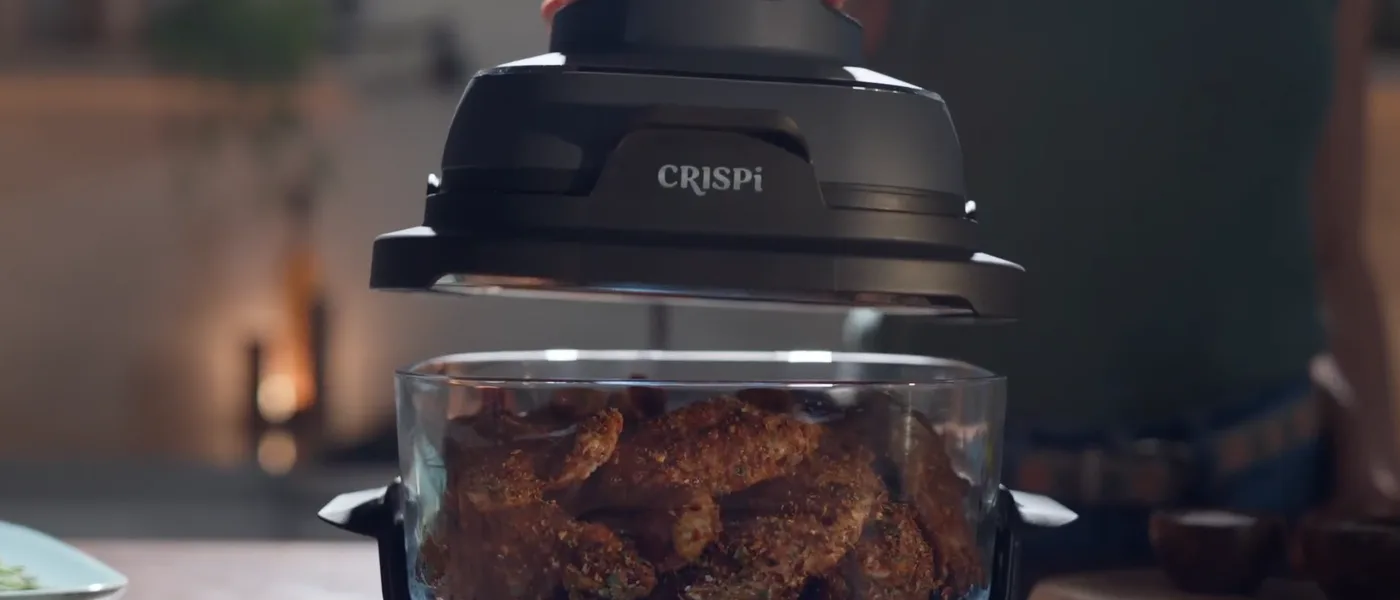

The Ninja Crispi 4-in-1 Glass Air Fryer swapped out our old plastic-basket fryer and brought glass cooking, solar-friendly power draw, and a two-bowl system into the mix. Here is what we think after a couple of weeks with it.
I got the Ninja Crispi for Christmas. It sat in the box for a couple of months while the old air fryer kept doing its thing. Then a few weeks ago I finally cracked it open, and honestly, I’m annoyed I waited that long. This is not a bigger, better version of what you have seen before. It’s a different approach entirely.
What It Is Built For
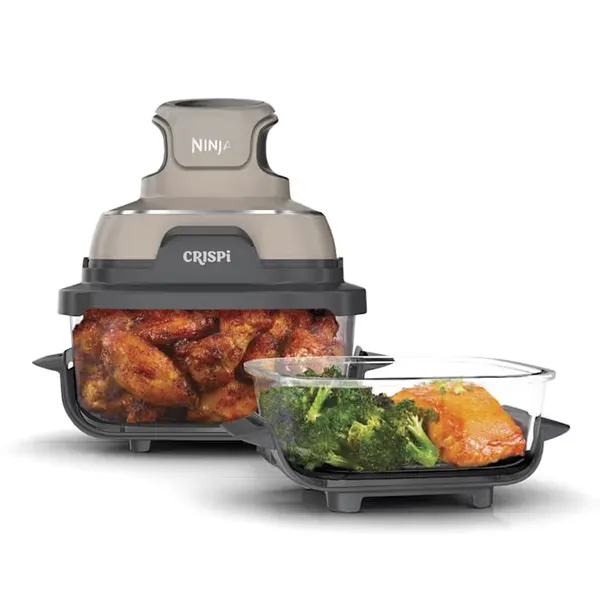
The Crispi is a pod-and-bowl system. The detachable PowerPod houses the fan and heating element and snaps onto borosilicate glass containers that double as cooking vessels, serving bowls, and fridge storage with the included lids. Two sizes come in the box: a 6-cup personal bowl and a 4-qt larger one that fits a whole chicken with room for vegetables around it. Four modes handle the cooking. Max Crisp for the highest heat, Air Fry for everyday crunch, Bake for gentler heat, and Recrisp for bringing leftovers back to life.
The point here is not more power or a bigger basket. It’s about getting rid of the plastic-coated basket entirely, giving you glass you can see through, and making the whole thing compact enough to stash in a cupboard or pack for a trip. For anyone who has been paying attention to the nonstick coating conversation lately, that’s the headline.
Design and Build
The glass is borosilicate, the same stuff you see in labware and good baking dishes. Clear, dishwasher safe, microwave safe, freezer safe. Ninja calls it CleanCrisp and markets it free of PFAS and PTFE, which is really the whole point. You’re not cooking against a coated surface. You’re cooking in what is essentially a glass bowl. That matters to me more than it would have a few years ago.
The two bowls nest inside each other along with the crisper plates and lids, so the whole kit takes up maybe half the space of our old basket-style air fryer. The PowerPod sits on top when you’re using it and stores separately. About the size of a small toaster.
The stock crisper plates are aluminum with a ceramic nonstick coating. They work fine. But I ended up picking up a stainless steel grill insert for mine instead. Just a personal preference, less coating to think about, and it fits the glass-and-metal ethos of the whole setup. There is a solid third-party market for stainless crisper trays if you want to go that route.
Performance in the Kitchen
The first thing I noticed was speed. Our old air fryer took its sweet time getting up to temp. This one is ready in about two and a half minutes. A personal bowl of fries or chicken bites is done in roughly seven minutes. The 4-qt bowl handles a full meal for two without issue.
Recrisp mode is the sleeper hit. Leftover pizza comes out like it just left the pizzeria. Last night’s fried chicken, day-old fries, even leftover takeout spring rolls. The Recrisp cycle brings back the texture instead of steaming everything into sadness. Because the glass bowls have their own lids, you can cook, lid up, fridge it, and recrisp right in the same vessel. One less dish to wash.
The controls are dead simple. Four buttons for the four modes, plus a timer and start. No scrolling through menus. Lift the pod off the bowl and it pauses automatically. The glass lets you see what’s happening without opening a drawer and losing heat, which is one of those things you don’t realize you want until you have it.
Cleanup is straightforward. Bowls, plates, adapter, lids all go in the dishwasher. Nothing sticks to the glass the way stuff sometimes welded itself to our old nonstick basket.
On the Solar Setup
This is where it gets specific to how we run things. We try to use cooking appliances that work off our solar and battery setup, and the Crispi fits that well. It draws about 1500W at the wall, which is well within what our inverter handles. A 15-minute cook cycle pulls about a third of a kilowatt-hour. That’s manageable on our battery bank.
The thing to know is that it needs AC power. This is not cordless. You need an inverter or a portable power station rated for continuous load around 1500 to 2000 watts. Smaller stations with sub-1000W inverters won’t run it. But if your setup already handles cooking appliances, this slides right in.
I’ve packed it for a weekend trip and run it off a power station without issues. The whole system, pod, both bowls, plates, lids, fits in a tote bag. For camping or road trips where you have inverter power available, it’s way more useful than a standard air fryer that takes up permanent counter space and doesn’t travel.
Where It Falls Short
The lack of manual temperature control is the biggest limitation. You get four modes, each with its own temp band, and that’s it. If a recipe calls for 350 degrees and your only option runs hotter or cooler, you’re guessing. It works for most everyday cooking, but anyone who likes dialing in exact temps will find it frustrating.
The price is another thing. This system runs more than plenty of solid 4-qt air fryers, and you’re paying for the glass, the dual-bowl design, and the portability. Those things have real value if they matter to you. If they don’t, cheaper options exist.
One more practical thing: there are a lot of pieces. Pod, adapter ring, two bowls, two crisper plates, two lids. If you’re someone who loses things, keep that in mind. And the glass, while durable, is heavier and more fragile than a plastic basket. Not a dealbreaker, just a trade-off.
Who Should Buy This
This is for someone who wants to cook without plastic-coated surfaces and doesn’t want to sacrifice convenience to do it. It is also for anyone with solar or a portable power station who wants real air frying on trips or during outages. And it’s for the person who cooks for one or two most nights and wants an air fryer that tucks away instead of dominating the counter.
If you are feeding a big family, need exact temperature control, or just want the cheapest way to air fry, the Crispi is probably not your pick. But if the glass pitch resonates and the two-bowl workflow sounds useful, it’s worth a close look.
Bottom Line
I didn’t expect a Christmas gift to reorganize our kitchen habits, but here we are. The Ninja Crispi cooks faster than our old air fryer, stores in half the space, travels better, and runs off solar without complaining. The glass vessels and the recrisp workflow are the real unlocks. It’s not the cheapest or the most versatile air fryer you can buy, but for what it does well, nontoxic glass cooking in a portable, packable system, it’s hard to beat.