

A decade-long look at the EGO 56V battery ecosystem. The battery-sharing logic, the 7.5Ah failure pattern, the warranty math, and whether the buy-in pencils out.
I bought my first EGO tool in 2015. A leaf blower, the LB4800. The original battery still runs that blower today, a decade later. That single purchase pulled me into an ecosystem I now use for almost everything on my property and in my commercial work.
And that’s the thing about EGO. You don’t buy one tool. You buy into a battery system. Whether that trade makes sense depends on how many tools you need and how long you plan to keep them.
Why We Did This
There’s plenty of debate about whether EGO is worth the premium. Some of it is fanboy hype. Some of it is warranted skepticism from people who watched expensive batteries die right after the warranty expired. Both sides have a point.
I’ve been working inside this ecosystem long enough to have some data points. Over the last ten or so years I’ve owned roughly 18 EGO batteries. Three of them failed. All three were 7.5Ah packs. The rest are still in rotation. That’s not a perfect track record, but it tells a more useful story than a five-star review or a forum rant.
The Battery Ecosystem
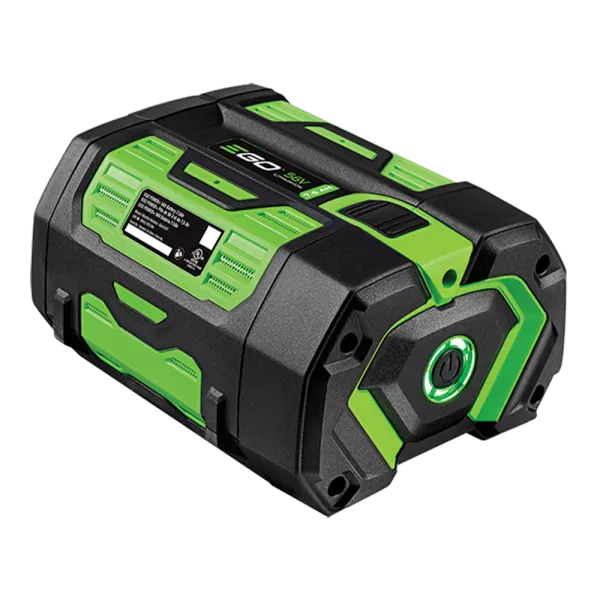
The whole pitch is simple. One battery shape, one voltage, one charger family. Any EGO ARC Lithium battery powers any EGO POWER+ tool. A 2.5Ah pack will run the string trimmer. A 12Ah pack will run the zero-turn mower. Same dock, same charger.
Once you own a couple of batteries, every bare tool you add costs a lot less than a gas equivalent. That’s the math most people miss when they look at the sticker price on a single tool. The marginal cost drops with every purchase. I’ve got batteries spread across mowers, blowers, chainsaws, a pole saw, a pressure washer, a snowblower. They all share packs. I have never once wished I had a separate fuel supply for each one.
The battery capacity ladder runs from 2.5Ah up to 12Ah. The smaller packs (2.5 through 5.0Ah) are where the sweet spot is for handheld tools. They keep the weight manageable. The bigger packs, 7.5Ah and up, are for the heavy stuff: mowers, snowblowers, gear that lives on the ground or in a cart where a few extra pounds don’t matter. EGO’s phase-change cooling material comes on the 2.5, 4.0, and 5.0Ah packs. The larger ones rely on the standard thermal management, which might partly explain the reliability gap at the top end.
Where the Costs Add Up
EGO batteries are not cheap. You know that going in. A large pack can cost enough to give a new buyer pause. The question is whether they last long enough to justify the price.
The consumer warranty on batteries is 3 years. Tools get 5. That gap matters. Plenty of forum posts and owner discussions center on packs that died a few months after the battery warranty expired. I’m not here to claim EGO has an industry-leading failure rate, but the pattern is real enough that anyone considering a major buy-in should know about it going in.
My own failure rate across 18 packs is about 17 percent. All three losses were the 7.5Ah size. That’s consistent with the chatter you see on owner forums and Reddit. I cannot tell you whether the 7.5Ah cells have a genuine design problem or whether it’s just the most popular capacity that got cycled hardest. But three failures in the same capacity class, across different purchase years, is a data point worth paying attention to.
Battery longevity also depends on how you store them. Leaving a pack on the charger all winter or running it dead flat before storage will shorten its life. That’s true of any lithium system, but it matters more when a replacement costs what these do.
The Warranty Split Nobody Talks About
If you are a homeowner, EGO’s warranty is solid. Five years on the tool, three on the battery. That covers most reasonable failure scenarios and puts EGO ahead of a lot of gas equipment on tool coverage.
If you are running a commercial operation, the warranty drops to one year on both tools and batteries. That is a meaningful difference. A landscaper buying a mower and a large battery needs to factor replacement cost into the business math much sooner than a homeowner. I use EGO commercially myself, and I buy knowing the packs are a consumable expense at that duty cycle. The commercial warranty is short, and you should treat it as a signal, not a gotcha.
The larger packs like the 10Ah and 12Ah offer an optional extended warranty path if you register and complete a survey. That’s worth doing if you buy those sizes, but it’s an extra step, not automatic.
Who It Works For
The EGO ecosystem makes the most sense for someone who owns or plans to own three or more outdoor power tools. A mower, a blower, and a trimmer is really the minimum configuration where the battery-sharing logic starts to pay off. Below that, you are paying a premium for the convenience of cordless operation without amortizing the battery cost across much.
For a single-tool buyer, say someone who just wants a cordless blower for their patio, EGO is probably overkill. There are cheaper battery platforms that will push leaves around a small yard just fine. The buy-in only makes economic sense once you’re sharing those packs.
For a commercial operator who needs all-day runtime on heavy tools, the calculation is different. The platform works. The power is there. But you’ll need a deep battery inventory, charging discipline, and a budget for pack replacement. I have found the build quality holds up well enough for daily commercial use, but I budget for battery turnover the same way a gas crew budgets for fuel and maintenance.
Final Thoughts
I keep buying EGO tools because the platform works. The power is real. The noise and maintenance advantages over gas are not marketing fluff. After a decade I can count the failures on one hand, and they were all the same battery size.
But I also went in knowing what batteries cost and what the warranty terms were. If I had bought a single blower, gotten three years out of the pack, and then paid nearly the same amount for a replacement, I’d probably be annoyed too. The ecosystem logic only works if you actually use the ecosystem.
For homeowners with a yard that needs more than one tool, EGO is a legitimate buy. For contractors, it can work, but the numbers pencil out differently. For anyone who wants one cordless gadget and nothing else, look at what you actually need before locking into any battery platform.
There is no universal right answer here. But if you are going to own three or four outdoor tools anyway, sharing one battery family across all of them is hard to beat. The math gets easier with every bare tool you add.